Key takeaways
- Research is about reducing your own ignorance, not predicting winners; work through purpose, team, tokenomics, usage, liquidity and security in order.
- Price alone is meaningless; market cap and liquidity tell you far more about real value and how easily you could exit.
- Guaranteed returns, relentless hype, anonymous insiders and hostility to fair questions are red flags that deserve serious scrutiny.
- No framework removes risk; if you cannot answer the key questions with confidence, that is a reason to slow down, not to buy.
Every week brings a fresh wave of tokens promising to change everything. Most will not. Researching an altcoin is not about predicting the future or catching the next big winner. It is about reducing your own ignorance, one honest question at a time, until you understand what you are actually looking at. The framework below is a repeatable checklist for any project. It will not tell you what to buy, and no coin here is judged good or bad; the aim is to help you think clearly before you risk anything you cannot afford to lose. Work through the sections in order, and take notes as you go.
1. What problem does it actually solve?
Start with the plainest question of all. What does this project do, who is it for, and why would anyone use it instead of an existing alternative? A serious project can usually explain its purpose in a sentence or two without jargon. If the pitch leans on buzzwords or claims to revolutionise several unrelated industries at once, treat that as a warning. Then ask whether the token itself is necessary, or whether it exists mainly to be sold. Imagine the product working without its token: if it would work just as well, the token may be there for fundraising rather than function.
Ask yourself
- Can you describe the product in one plain sentence?
- Does the token play a real, necessary role, or is it decorative?
2. The team, documentation and transparency
People build projects, and people are accountable. Look for a team willing to be identified and with a track record you can check. Anonymity is not automatically disqualifying, since parts of this industry value privacy, but it raises the bar: if nobody will attach their name to a project, you take on more trust with less recourse when things go wrong.
Read the documentation. A credible project explains clearly how it works, sets out a roadmap that is specific rather than fantastical, and acknowledges its risks. Be wary of material that is all marketing and no substance, or that copies large sections from other projects. Check whether the code is open to inspection and whether development is ongoing rather than abandoned after launch.
Ask yourself
- Can any of the team’s claims be verified independently?
- Is there real, continuing development, or did activity stop after launch?
3. Tokenomics and supply
Tokenomics describes how a token is created, distributed and used, and it is one of the most overlooked parts of research. Two numbers matter first: how many tokens exist now, and how many will eventually exist. A large gap means significant future supply is still to be released, which can weigh on the price regardless of how the project performs.
Look at who holds the supply. If a few wallets, insiders or early backers control a large share, they may have outsized influence over the market. Study the release schedule, sometimes called vesting or unlocks, to learn when large amounts might become available to sell. Then ask what the token is actually for, whether governance, fees, staking or something else. A token with no use beyond speculation relies entirely on someone else paying more later.
Ask yourself
- What is the current supply versus the maximum eventual supply?
- How concentrated is ownership, and when do insider tokens unlock?
4. Real usage and traction
Ideas are cheap; adoption is hard. Look for evidence that anyone is actually using the project, whether that is active users, genuine transaction activity, integrations with other services, or a community that discusses building with the product rather than only its price.
Separate real traction from manufactured excitement. Social buzz, follower counts and giveaways are easy to inflate and say little about lasting value, and price going up is not the same as a product being used. Where you can, cross-check claims against more than one independent source.
Ask yourself
- Is there evidence of genuine use, not just marketing noise?
- Is the community focused on the product or only on the price?
5. Liquidity, market cap and price
Price on its own tells you almost nothing. A low price per token does not mean a coin is cheap, and a high price does not mean it is expensive, because the number of tokens differs wildly between projects. The more useful figure is market capitalisation, which multiplies price by circulating supply to give a rough sense of the total value the market assigns; it is imperfect, but far more informative than price alone.
Just as important is liquidity: how easily you could buy or sell without moving the price against yourself. Thinly traded tokens can look attractive on the way up but become hard to exit when sentiment turns, sometimes leaving holders unable to sell near the quoted price. Smaller, less liquid altcoins also tend to swing violently in both directions. None of this makes a project good or bad; it shapes the risk you take on.
Ask yourself
- Are you looking at market cap, not just the headline price?
- Could you realistically exit the position without crashing the price?
6. Security, audits and red flags
Because most altcoins run on smart contracts, code quality matters. Independent security audits can help, but they are not a guarantee: an audit is a snapshot in time, covers only what was examined, and does not certify that a project is safe or its team honest. Read what an audit actually says rather than trusting that one exists, and note who performed it.
Finally, keep a mental list of red flags. Guaranteed or fixed returns are the clearest warning of all, because nothing here is guaranteed and anyone promising otherwise is either mistaken or dishonest. The list below captures the rest. Any one deserves scrutiny; several together are a reason to walk away.
Common warning signs
- Promises of guaranteed, fixed or risk-free returns.
- Urgency and hype pushing you to act before you have done your homework.
- Anonymous insiders with large, unexplained control over supply.
- Hostility towards fair criticism or difficult questions.
Putting it into practice
No framework can remove risk, and no research turns speculation into certainty. What it can do is help you separate substance from noise and understand what you are holding and why. If you cannot answer these questions with reasonable confidence, that is itself an answer. Above all, do your own research, commit only money you can afford to lose entirely, and treat the willingness to say no as one of an investor’s most valuable skills. You can keep exploring the subject through our wider altcoins coverage.
This article is for informational purposes only and is not financial advice.
Close-up — What happened
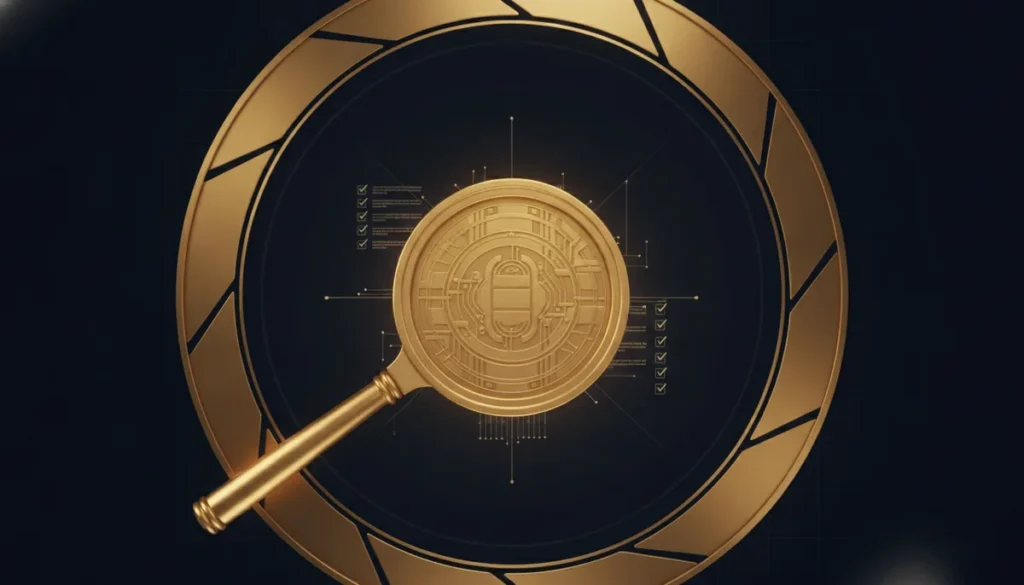
Altcoin research means working through a checklist: the problem solved, the team and transparency, tokenomics and supply, real usage, liquidity and market cap versus price, and security audits and red flags.
Wide shot — What it means
None of this predicts price or guarantees safety. It simply helps you understand what you are holding and the risk you are taking, so you can decide with clear eyes rather than hope.
The Aperture brings the close-up and the wide shot into focus. Not financial advice.
Frequently asked questions
Does researching an altcoin guarantee I will avoid losses?
No. Research reduces the chance of an obvious mistake and helps you understand what you are holding, but it cannot remove risk or guarantee any outcome. Only ever commit money you can afford to lose entirely.
Is an anonymous team an automatic reason to avoid a project?
Not automatically, since parts of this industry value privacy. However, anonymity raises the bar, because you have less recourse and are placing more trust with fewer ways to verify claims or hold anyone accountable.
Why does market cap matter more than the price of a single token?
Because the number of tokens differs enormously between projects, a low price does not mean cheap and a high price does not mean expensive. Market cap multiplies price by circulating supply, giving a far better sense of the value the market currently assigns.

Explains cryptocurrency markets, blockchain adoption, and digital finance through clear analysis focused on long-term industry trends and real-world adoption.